Finding Myself Through DECA

woman doing a presentation

by Anonymous

My heels clicked on the floor as I approached the doors to my first DECA competition. Immediately, I was welcomed by the conversations of hundreds of students and judges attempting to converse with groups around them. I struggled to grasp even the simplest phrases from my competitors. The smallest words such as ‘prepared’ and ‘practice’ stuck with me, consuming my thoughts and threatening my excitement with nerves. As I ventured further into the storm of suits and dresses, the confidence from my competition bounced right off of me. My chest tightened with each breath, as my anxiety slowly started to form.


When our competition was announced, my partner and I walked down the elongated hallway and into a cavernous room with white fold up tables and folders layed out. As we prepped for our role-play in front of the judge, I felt the same nerves as I felt in eighth grade, standing in front of my class trembling. I had fumbled over my words helplessly attempting to talk about Asthma. The more I attempted to recover my words the clumsier they got, until finally I choked out my last few and quickly ran to my desk to shut everyone out. The world spiraled around me, my heart sped up, and my breathing became uncontrollable, this was the first introduction to my anxiety. As I sat down in front of the judge, I had that same anxiety, but something was different, I knew how to control it. After taking a couple deep breaths, I launched into our key points. 


I left the judging room with more nausea and pride then I knew was possible. We walked back into the bustling room to prepare ourselves for the awards. My partner and I agreed a miracle would be needed for us to place, yet we let a small spark of hope keep us on the edge of our seats. When we were called up for third place, we had the sensation of pure astonishment and enthusiasm. 


Knowing how much time I had spent preparing myself to take control of my stress and finding a way to manage my anxiety was, and still is a challenge that I am learning to deal with. Taking that step to try something completely foreign was difficult, but the one thing the experience taught me was how I can put my anxiety to the side and focus on how to improve. 


High school is a time when most students broaden their interests by signing up for a variety of different clubs and classes that are unfamiliar. For me, high school was a time to maintain in a comfortable zone. DECA was my first step out of the mindset that I had to keep to myself, this new opportunity made me realize that I didn’t need to maintain an environment that was well-known to me. By breaking from this, I have been exposed to a numerous amount of opportunities, all of which have challenged me. My potential is yet to be met, and I have the chance to continue improving upon not letting my words just clumsily slip out. 

The Murphy Campus: A History

By: Audrey Russel and Thea Seckinger

Have you ever wondered about the history of our school? To learn more about our school’s past, we have to rewind almost 40 years to the beginning of Murphy, or Holy Cross High School, as it was first named. It wasn’t until 1999 that the campus was moved to where it is now and renamed Archbishop Murphy, after the late Archbishop Thomas J Murphy. Even then, our school only consisted of Holy Cross Hall and a few portables. There was no football field, softball field, or chapel, and. Only about 250 students attended Murphy each year. 

Original Holy Cross Hall

The softball and baseball field

It wasn’t until 2017, with the completion of the chapel, that AMHS really started to feel like the school we know today, complete with a place to play sports with friends, a place to experience God’s grace without any criticism, a place to make friends, and a place to grow. Now, as the last snow falls and the weather gets warmer, we prepare for spring break and take a moment to appreciate the campus we are lucky enough to enjoy. 

                Credit: Mikaela B.          Credit: Ivy G.       
                                                        

To show some appreciation for our beautiful campus, we asked the students of AMHS to think of their favorite spots at school. Here are the responses we received:

“My favorite place on campus is the Chapel, because I like how it’s quiet.” – Laura McVicker (10)

“I like the cafeteria because it’s where I get to talk to people.” –Dimitry Lewark (10)

“I like the comfy armchairs in the ELC.” –Nicole Alvarez (12)

“The library (ELC) because I like Mr. Meehan and Ms. Hall, plus it’s a super comfy space.” –Laura Esping (10)

“Counselors’ center because it’s chill.” –Lizzy Robinson (9)

“Definitely the quad area or the Chapel.” –Mr. Matusak and Bubba

“The Chapel – it’s fire.” –Marco Herrera (10)

“The Chapel because I like looking at the trees.” –Mr. Meehan

A Criminal Niche

By: Ian Phillips

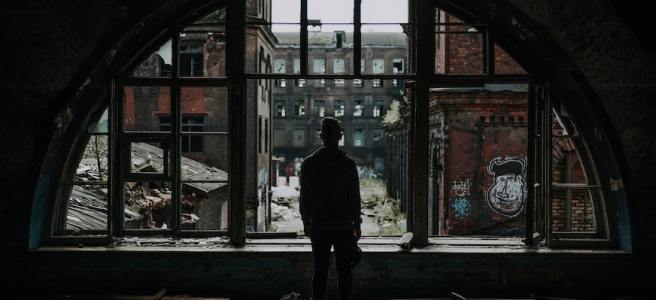
Following the dissolution of the Soviet Union in 1991, many of the facilities that came to represent the country during the Cold War were abandoned. While still remaining in the files of government buildings, the structures of socialist realism and relics of life behind the “Iron Curtain” fell into disrepair. From the ruins of these institutions rose a niche hobby comprised of criminals who roam these facilities in search of wealth and wisdom. Commonly, these people are called stalkers.

For context, the word stalker comes from a popular Soviet movie Сталкер, or stalker in English. The movie, directed by Andrei Tarkovsky, follows a group of three men who trek through an ambiguous abandoned “zone”. The zone does not abide by the laws of physics and frequently exhibits supernatural and extraterrestrial anomalies. Inside this zone is a place called “The Room”, an odd space that fulfills the deepest desires of all who enter. The movie expresses profound themes of existentialism, ethical dilemmas, and exploration of the self. Modern stalkers have even aligned themselves with the themes and characters in the movie, naming their culture after the titular “stalker.”. 

While the meaning of the word stalker is not completely agreed upon, the majority of stalkers have defined themselves broadly as people who enter the ruins of abandoned soviet architecture and buildings. One group of stalkers, the Saint Diver Team Diggers, describe stalking as the “process of knowing the world by visiting ground-based man-made structures.”. Essentially, stalkers are a broad group of people who infiltrate long-decommissioned Soviet infrastructure for various reasons, be it to steal copper and technology, graffiti the structures, drink, or generally explore the architecture. In the United States, there is a similar hobby known as “Urbex”, which is like stalking, but more reminiscent of industrial tourism, in which people visit the notable structures of certain industries. 

The criminal aspect of stalking arises in the trespassing part of it. While many of the structures stalkers explore are technically abandoned or decommissioned, they tend to be guarded by Russian military personnel who shoot and ask questions later. Examples of these structures include an abandoned submarine base in the Pavlovsk region, a lighthouse powered by a nuclear battery, an abandoned proton collider facility in Protvino, the entirety of the Chernobyl exclusion zone, etc. All of these facilities are strictly off-limits to civilians, let alone tourists looking to explore. The risk of death, prosecution, or radiation/chemical poisoning all contribute to the allure, but so does the pure thrill of exploration. Unfortunately, the oral tradition of the hobby has largely obscured stalking and what it stands for. To many Russians, stalkers are drunk teenagers and thieves who exploit and steal from old Soviet structures, but to many practitioners it’s a passion, allowing people to experience a bygone era of socialist culture and immerse themselves in a liminal atmosphere akin to the solitude and mindfulness found in nature. 

It is interesting to examine how a kind of spirituality can be found in the ruins of a civilization. The lack of any people in a place that was once made to house so many exhibits an inherent contradiction, yet the ambiance created by this dynamic is oddly tranquil. In the film Сталкер, the main character is overcome by this spirituality of liminal space. He struggles throughout the film to maintain the serenity of the zone, resorting to violence and groveling to keep his companions from destroying this fantastical kingdom. This is the main arc of the stalker: as he comes to terms with what the zone has turned him into, he struggles to maintain it and considers what it stands for to everyone else. 

Similar to how Fyodor Dostoevsky sees the necessity of suffering in the world, so do stalkers. To stalkers, these decaying structures symbolize suffering and destruction, but more importantly the hope that emanates from the horrors of the past.  Stalking, then, is a kind of immersion in suffering. Like bungee jumping, it brings those who do it as close as possible to death and annihilation. It brings them so close, in fact, that when they emerge they can only be left with sheer admiration for the potential of the world around them. The contrast between these structures and the world people live in leaves them with the realization that society survived whatever it was that brought down the grand monuments of the Soviet Union, so it can surely survive the status quo, however grim.

Healthy Mind, Healthy Soul, Healthy Wildcat

Kainoa Evans

School can be described as busy, stressful, and in some cases, chaotic, with all of the tests, exams, and assignments. On top of all that many students have extracurriculars that take up additional time.

In the midst of all of this, time to relax and spend time with family and friends is necessary. If we choose to fill at least some of our time with things that we enjoy or find peace and tranquility in our lives at school, in our activities, and at home will be better experiences.

School may be difficult and quite complicated but we must always remember that we are privileged to receive an education. A majority of children in the rest of the world do not get the opportunities that we receive in our lives so we must also make the most of it.

Along with doing the best at school, remember to continue pursuing things that provide contentment. By doing so, in the future we will definitely think of high school as a time when we succeeded and pursued what we loved.